Tennis-ball collector
The P6 rover plus a detector plus an intake. A working Tennibot, built so you know which parts were actually hard.
Weeks 16–19 · P6 M3 Pro + intake · ~$90 · 07_ball_collector/
Goal
Tennibot’s Rover is $2,275. Most of that robot is P6. Start perception cheap: HSV → blob → ray to ground plane → map-frame pose with covariance. Task loop: nearest ball → Nav2 → intake → beam-break confirm → repeat. Then train a small YOLO on your own court footage and compare against HSV on the same tape. Iterate the printed intake and log jam rate per 50 balls. Stretch: frontier exploration and a ball-density heatmap. Honest surprise: vision is the easy part. The hard parts are the intake, the hopper on turns, and a battery that lasts.
Why it matters
You took a commercial capability list and built a working version from scratch, and you know which parts were hard. That is a different kind of knowledge from following a tutorial. Tennibot’s 4–5 hour battery figure is a hardware achievement, not a software one.
The work
- 01
HSV segmentation → centroid → ground-plane ray → map-frame detection with covariance.
- 02
Task loop: nearest ball → Nav2 goal → intake → beam-break → mark done → repeat.
- 03
Train YOLO on the 5090 from your own court images. Compare vs HSV: precision, recall, FP/min, Orin NX latency.
- 04
Printed roller + hopper. Log jam rate per 50 balls.
- 05
Stretch: frontier exploration of an unmapped court; density heatmap.
Done looks like
- Detector table: HSV vs YOLO (precision, recall, false positives/min, Orin NX latency).
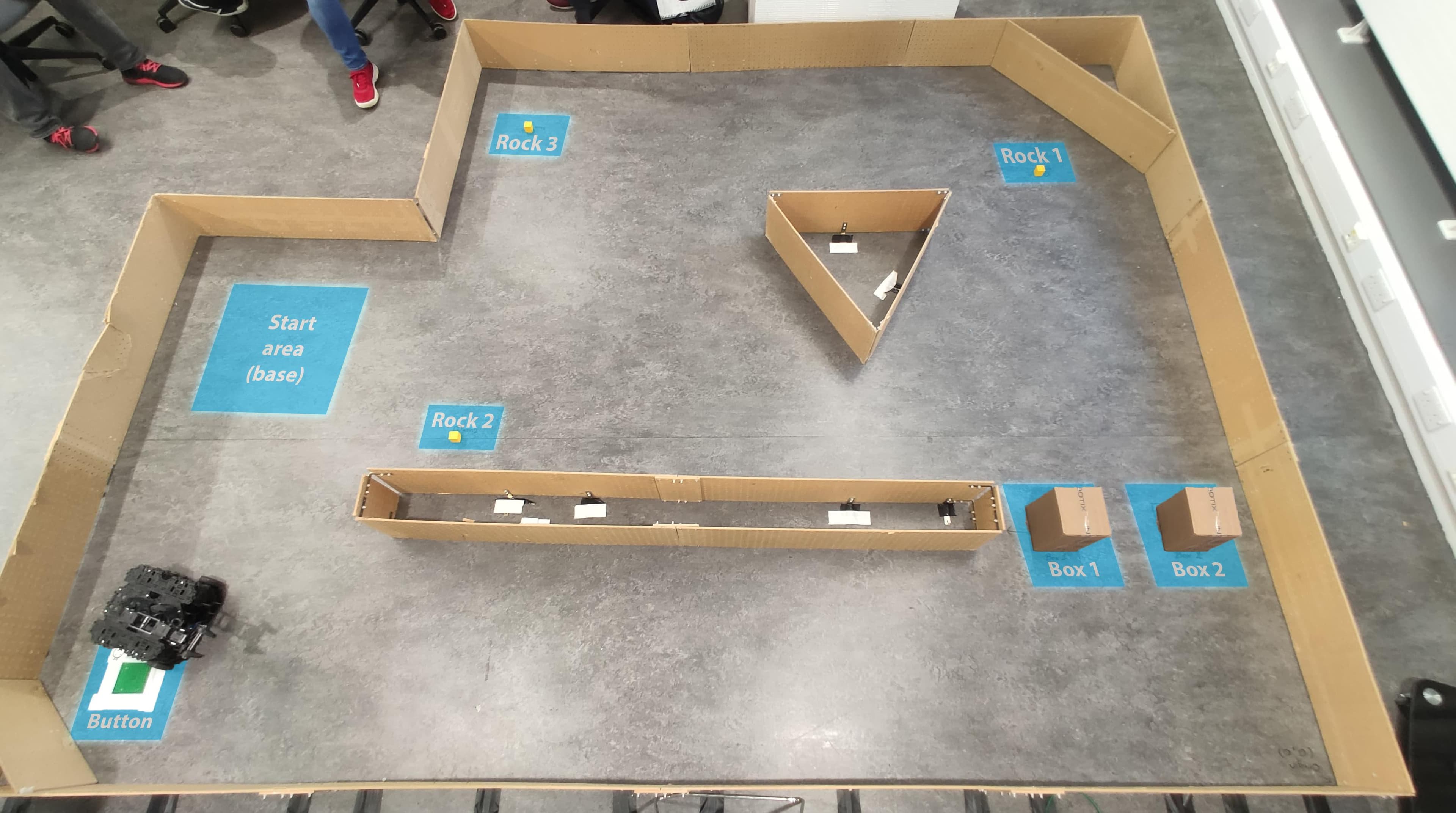
- Sim: 20 balls in the Gazebo court, cleared autonomously, metrics logged.
- Real demo: physical rover clearing 20 balls from a court or driveway, unattended, on video.
- Metrics: collected/total, time-to-clear, path efficiency per ball, jam rate, collisions.
- Battery runtime under load, power budget by subsystem, honest comparison to Tennibot’s 4–5 hours.
- docs/gap_reports/GR04-ball-collector.md
Stack card
| Simulator | Gazebo Harmonic (extends the P6 world) |
|---|---|
| Trains on | RTX 5090 (detector) |
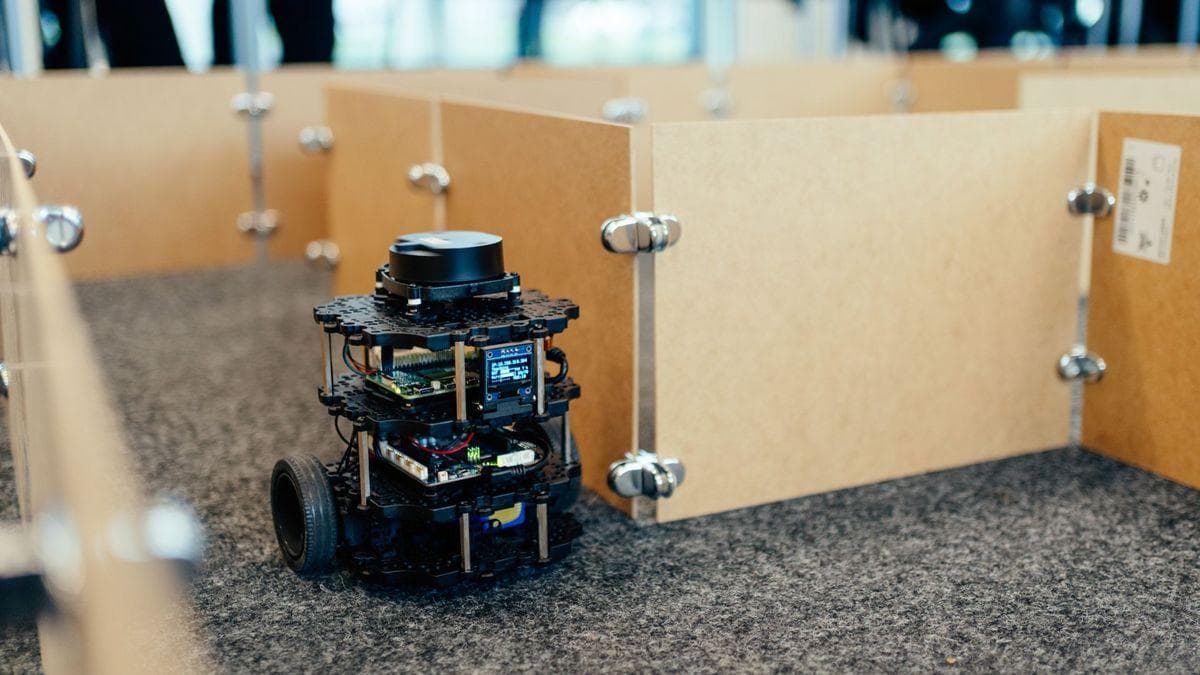
| Runs on | Yahboom M3 Pro Orin NX Super 16GB |
| Buy | Intake motor ~$25 · printed hopper/roller ~$20 · beam-break ~$15 · tennis balls ~$30 → ~$90 |
| ROS 2 | Yes |
| Gazebo | Yes |
| Compute / target | Yahboom M3 Pro Orin NX Super 16GB |
| Install | Everything from P6, plus ultralytics (YOLO) or OpenCV HSV, image_transport, vision_msgs |
Repos to study
Watch out
- Do not treat HSV working as the finish line. The intake jam rate is the number.
- Keep P6 succeeding on its own terms. This project stands on that rover.
Workstreams
Perception node, task loop, intake mechanism, hardware demo.
HSV-vs-YOLO table, clear metrics, battery budget, GR04.
Cross-check. Same 20-ball layout in Gazebo and on the driveway.
What this proves
You built a working version of a $2,275 product and can say which parts were hard, and why.
The vision is the gift. The intake and the battery are the project.
Study videos
Gear / BOM