Robot menagerie
Point common/eval_harness, sysid, and deploy at robots you did not design. Or find out they were three scripts in a trenchcoat.
Weeks 19–23 · M3 Pro from P6 + Bittle X · ~$300 · 08_menagerie/
Goal
By now common/ claims to be infrastructure. This project tests that on unfamiliar SDKs. Reuse the M3 Pro from P6 and run the P4 imitation pipeline as mobile manipulation. Bring up Bittle X, run stock gaits, characterize servos the way P3 characterized the arm. Port common/deploy/ to Orin NX, Pi 5, and ESP32-class hardware. Port the harness schema across three robot types. Write the interop note: where ROS 2 helped, where it was overhead, and where a shared dataset format actually reused data.
Why it matters
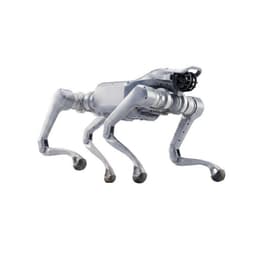
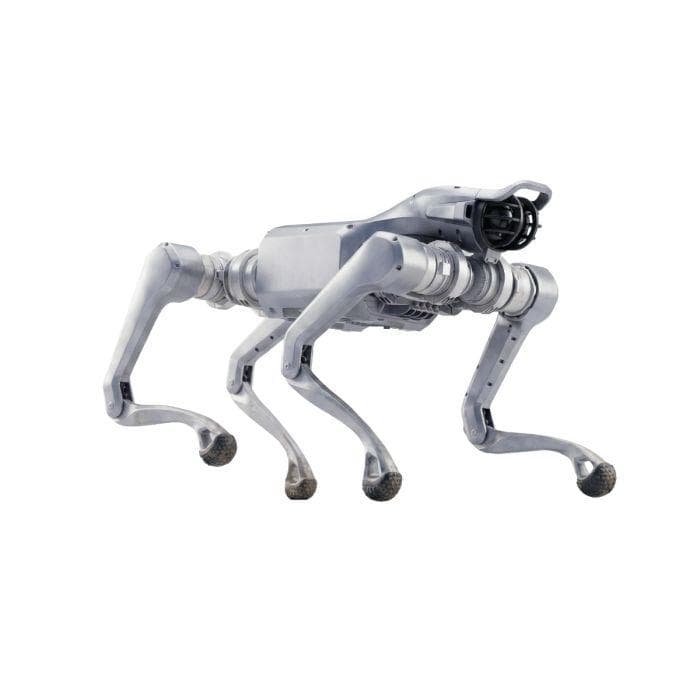
Cheap breadth: Bittle adds a new embodiment while P6’s M3 Pro is already a mobile manipulator. Bittle is the cheapest honest quadruped and feeds P9. TurtleBot 4 Lite (~$1,200) adds little once P6 exists. Skip it.
The work
- 01
Reuse the P6 M3 Pro. Run P4 imitation with a moving base. Measure what breaks.
- 02
Bring up Bittle X. Stock gaits. Characterize servos: tracking error, latency, torque ceiling.
- 03
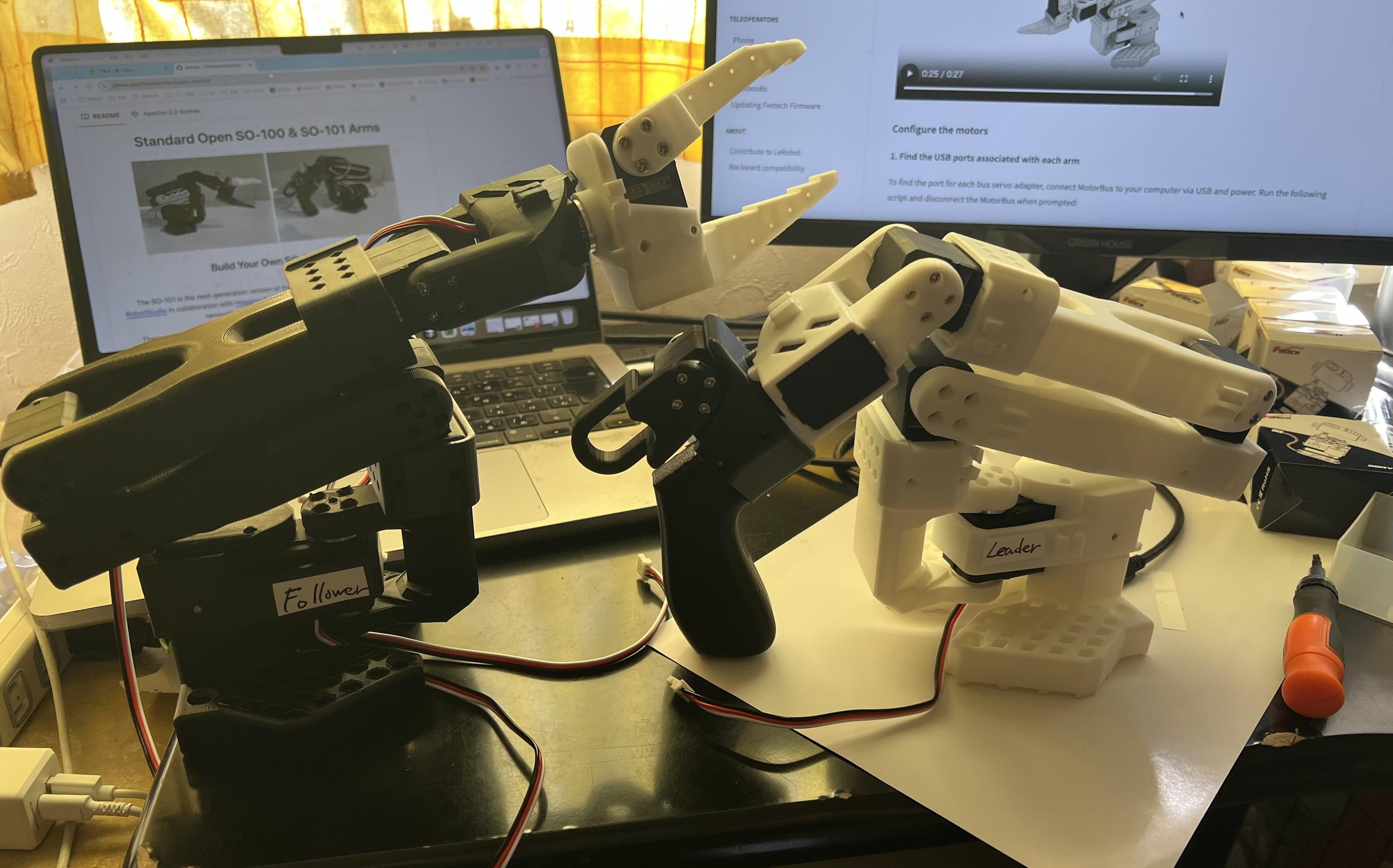
Port common/deploy/ to both. Document every SO-ARM101 assumption that broke.
- 04
Port common/eval_harness/. One schema across three robots, or write why not.
- 05
docs/interop-note.md
Done looks like
- M3 Pro reused, mobile-manipulation policy trained and deployed.
- Bittle X characterized: tracking error, command latency, torque ceiling (P3 discipline).
- common/deploy/ on Orin NX, Pi 5, and ESP32-class, or a written account of exactly why one needed a change.
- One eval-harness schema producing comparable runs across three robots.
- docs/interop-note.md: where ROS 2 earned its place and where the shared format actually reused data.
Stack card
| Simulator | Mixed. MuJoCo for arm platforms |
|---|---|
| Trains on | RTX 5090 |
| Runs on | Pi 5 / ESP32 / Orin NX (deliberately mixed) |
| Buy | Bittle X ~$300. Reuse the M3 Pro from P6. Skip TurtleBot 4. |
| ROS 2 | Mixed |
| Gazebo | No |
| Compute / target | Raspberry Pi 5 (desk arm), ESP32 (Bittle), Orin NX (rover) |
| Install | lerobot where useful, Petoi OpenCat for Bittle, ROS 2 only where the platform is native |
Repos to study
Watch out
- Do not buy TurtleBot 4 Lite. P6 already is the ROS 2 rover.
- A Go2 decision waits until week 20.
Workstreams
M3 Pro reuse, Bittle bring-up, deploy ports.
Servo characterization, harness schema, interop note.
Cross-check. A run from the M3 Pro and a run from Bittle open in the same harness viewer.
What this proves
common/ is infrastructure, not scaffolding, and you can bring up unfamiliar hardware quickly.
Most of the job is bringing up unfamiliar hardware quickly.
Study videos
Gear / BOM