Legged sim-to-real
Train locomotion at scale, ablate domain randomization on hardware, and attribute the gap to actuator limits you already measured.
Weeks 23–29 · $0 on Bittle · or +$1,600 Go2 · 09_legged_rl/

Goal
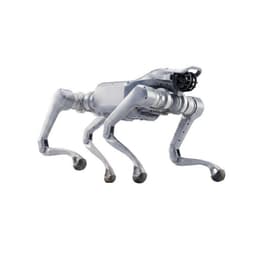
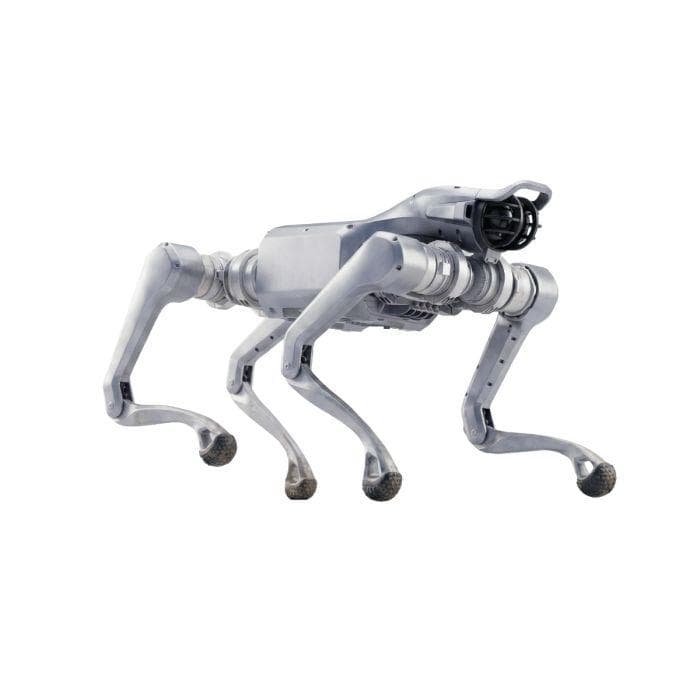
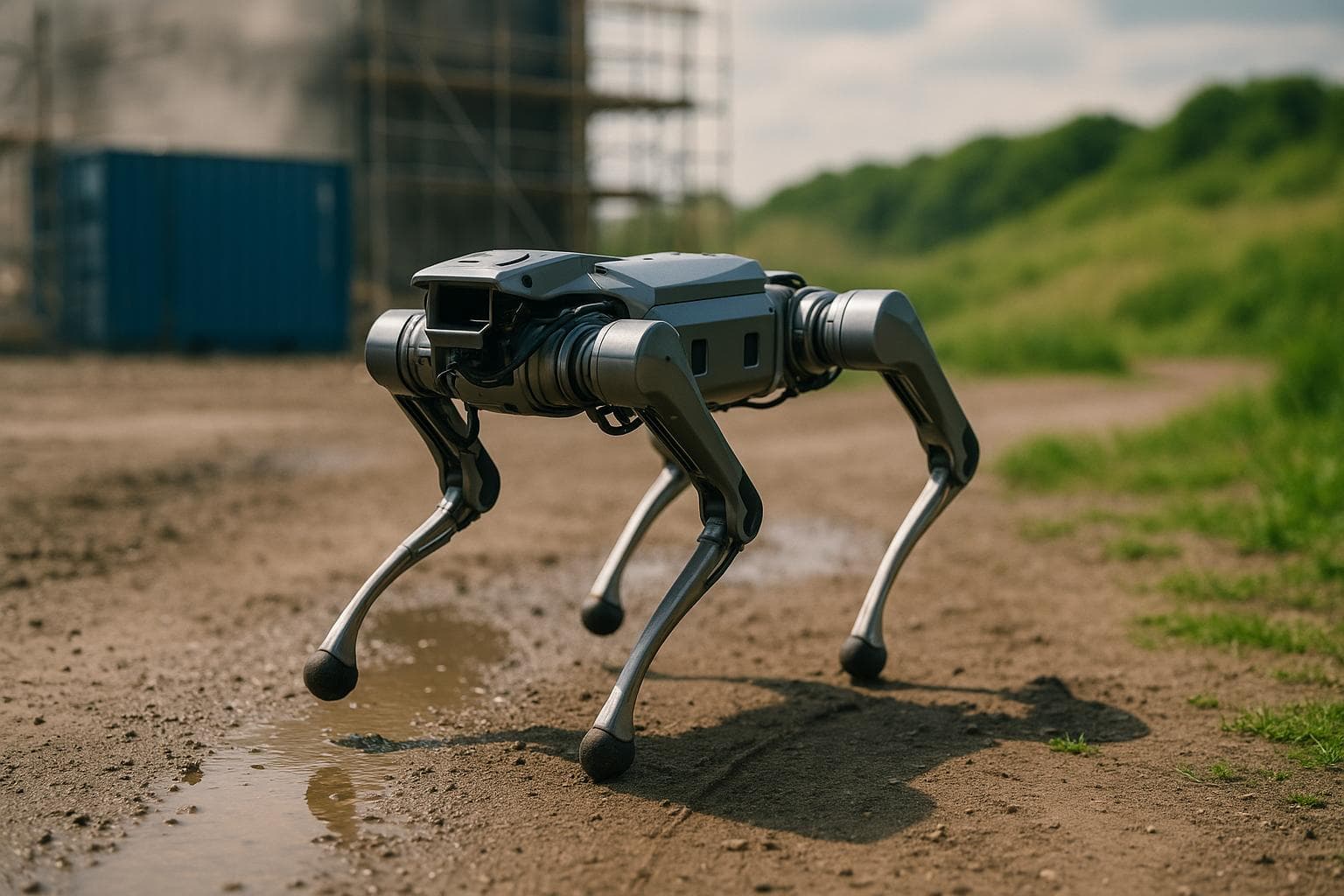
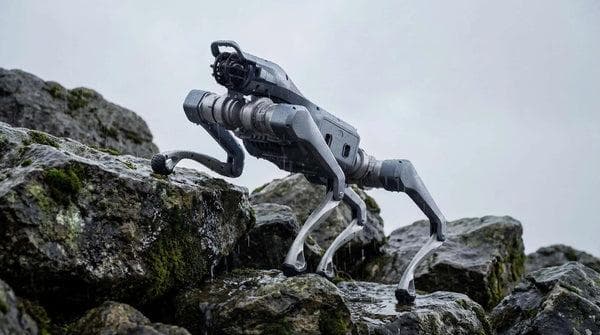
Isaac Lab, thousands of envs, PPO, velocity-tracking. Start from unitree_rl_gym. Treat domain randomization as a measured experiment: with/without, multiple seeds, same held-out perturbations. Then on hardware, did the randomized policy actually transfer better? Reward-term changes are separate harness runs. Deploy through common/deploy/ from P5/P8. A large gap on Bittle is the result, not the failure, if you can attribute it to P8 servo numbers. Buy a Go2 only if legged becomes the specialization.
Why it matters
Papers assume randomization helps. Measuring it on your own machine is the interesting part. “I trained a locomotion policy, deployed it on a $300 quadruped, and here is which actuator limit ate the transfer” is a better conversation than a clean Go2 clip that just reproduces someone’s repo.
The work
- 01
Isaac Lab PPO velocity-tracking. Start from unitree_rl_gym.
- 02
Domain-rand ablation: with/without × 3 seeds, identical held-out perturbations, confidence intervals.
- 03
Every reward-term change is its own harness run with a before/after clip.
- 04
Export through common/deploy/. Run on Bittle (or Go2).
- 05
2×2 transfer: velocity-tracking error and fall rate, sim vs real, randomized vs not. GR05.
Done looks like
- Trained locomotion policy with a headful Isaac Lab replay video.
- Domain-rand ablation: with/without × 3 seeds, identical perturbations, confidence intervals.
- Policy exported and running on real quadruped hardware.
- Transfer 2×2: tracking error and fall rate, sim vs real, randomized vs not.
- docs/gap_reports/GR05-legged-transfer.md attributing the gap to P8 actuator limits.
Stack card
| Simulator | Isaac Lab (train) + MuJoCo (contact studies) |
|---|---|
| Trains on | RTX 5090 |
| Runs on | ESP32 on Bittle, or Go2 onboard |
| Buy | $0 if Bittle from P8 · $1,600+ for Go2 EDU |
| ROS 2 | No (optional later for nav) |
| Gazebo | No |
| Compute / target | ESP32 (Bittle) or Go2 onboard |
| Install | Isaac Lab, rsl_rl, unitree_rl_gym as reference, ONNX export, Bittle or Unitree SDK |
Repos to study
Watch out
- Do not call a Bittle result a Go2 result.
- ROS 2 only if you later add a navigation layer on top.
Workstreams
Isaac Lab training, export, onboard bring-up.
Ablation, 2×2 transfer, GR05.
Cross-check. Line-by-line review. This deploy path is reused in P10.
What this proves
You can train at scale, reason about what transfers and why, and produce evidence rather than a claim.
A large, attributed gap is a result. An unmeasured clean clip is a claim.
Study videos
Gear / BOM